07 April 2013

Book review: Good to Eat. Riddles of Food and Cultures (1986), by Marvin Harris, *****

Eating injera with hot spices at Lalibela, Ethiopia
testo italiano di seguito

Synopsis

Why are human food habits so diverse? Why do Americans recoil at the thought of dog meat? Jews and Moslems, pork? Hindus, beef? Why do Asians abhor milk? Harris leads readers on an informative detective adventure to solve the world's major food puzzles.

He explains the diversity of the world's gastronomic customs: what appear at first glance to be irrational food tastes turn out really to have been shaped by practical, or economic, or political necessity. In addition, he sheds wisdom on such topics as why there has been an explosion in fast food, why history indicates that it's "bad" to eat people but "good" to kill them, and why children universally reject spinach.

Good to Eat is more than an intellectual adventure in food for thought. It is a highly readable, scientifically accurate, and fascinating work that demystifies the causes of myriad human cultural differences.


Review

This is a highly readable account of why the world's diverse civilizations eat what they eat; why peoples in different parts of the world grow to abhor certain readily available foodstuffs; and why they usually don't eat each other.

The starting point of the book is man's generalized craving for animal food (meat, fish, milk, eggs), because it is a source of more and better proteins than vegetarian alternatives. Only soybeans approach animal food in this respect, though plant food provide indispensable fibers. Despite the evil effects of too much meat, grain eaters tend to live less. Top primates, including man, tend to be omnivorous, an obvious advantage over animals dependent on fewer food categories.

Harris explains why Indians don't (by and large) eat beef, though they did in the past. It was at the time of Asoka (3rd century B.C.) that once widespread animal sacrifices were stamped out to prevent loss of animal plow-pulling power, dung and milk. And yet, beef is eaten in India and calfs are regularly slaughtered when not needed.

In the Middle East, the problem with pork is not so much its being prone to carry disease in hot weather or if not cooked properly: that is not unique to pork or to the Middle East. Pork is a staple in hot climates from the Indian ocean to the Pacific. It is the fact that in Middle Eastern circumstances pigs need extra shelter, water and lots of plant food that humans themselves can eat. Pigs are sometimes seen as dirty, but given enough water they are anything but. In Papua, women will sometimes breastfeed a pig if somehow it gets separated from the sow.

Horses were banned from the grill in the middle ages because they were more useful alive to be mounted in war. A war horse was worth more than a slave. later, horses never became a main source of meat because cattle and pigs are far more efficient producers of proteins.

Dairy products are not eaten by most peoples in East Asia. They can not digest lactose. Why? Because the condition of their agriculture never required as much plowing as elsewhere and therefore not as much milk producing animals.

Most people in the world eat insects. Europeans and Americans are the exception rather than the rule. At least now: the ancient Greeks and Romans did eat cicadas and grasshoppers. That's because for us it is less efficient to chase insects than raise animals in a farm as a source of food. There are billions of insects out there to provide us with proteins, but they are small and mostly hard to get.

And the book goes on, discussing at great length why people, by and large, don't eat one another... but I'll leave that to the reader to discover in the book!

Highly recommended.

Buy on Amazon


Recensione italiana

Racconto molto leggibile sul perché le culture del mondo si sono sviluppate in modo molto diverso fra di loro. Il libro spiega perché mangiamo quello che mangiamo e perché aborriamo quello che evitiamo di mangiare.

Il punto di partenza è che il genere umano generalmente cerca cibo di origine animale (carne, pesce, uova) perché è fonte di proteine più che il cibo di origine vegetale, anche se le piante ci forniscono le indispensabili fibre. I primati più sviluppati, tra cui noi umani, sono onnivori, un evidente vantaggio su altri animali che sono dipendenti da un numero più limitato di fonti di nutrimento. Nonosante il danno che viene dall'abuso di carne, e culture che mangiano solo vegetali tendono a vivere meno di quelle onnivore.

Harris spiga perché in India (di solito) non si mangia carne bovina, anche se ciò avveniva in passato: i buoi servono di più a tirare gli aratri, e forniscono latte e sterco combustibile. indispensabili per le culture di quel paese. E comunque i bovini vengono macellati e mangiati in India più di quanto appaia a prima vista.

Nel medio oriente, il problema del maiale è che consuma molta acqua, che lì è scarsa e quindi preziosa.

I cavalli erano banditi dalla tavole nel medio evo perché più utili in guerra. Un cavallo poteva costare più di uno schiavo, e maiali e bovini fornivano la carne necessaria in modo più efficiente.

In Asia orientale non si mangiano latte e formaggi. Quei popoli non digeriscono il lattosio. Perché? Harris spiega che il tipo di agricoltura prevalente lì, a differenza che in India, non richiede aratri (e quindi buoi) e quindi i bovini diventano iù convenienti come fonte di carne che di latte e formaggi.

La maggior parte dei popoli del mondo mangia insetti, spesso perché, pur essendo piccoli e non facili da catturare, sono economici e non richiedono conoscenza di allevamento.

Il libro spiega anche perché gli umani, in genere, non si mangiano a vicenda, ma questo lo lascio scoprire al lettore...

Altamente consigliato!


04 April 2013

Film review: Mahler on the couch (2010), by Percy Adlon, ****

Synopsis

Devastated and confused by the discovery that his beloved wife Alma is having a passionate affair with architect Walter Gropius, controversial composer Gustav Mahler travels to Holland to consult with Sigmund Freud, who is on vacation in Leiden. Feeling humiliated and betrayed, Mahler initially refuses the couch, but when Freud wheels a camp bed into the room, he has no choice.

Fiery yet full of humor, their encounter stretches into the night as Mahler vividly recounts his seduction of Alma Schindler, 19 years his junior, the beautiful darling of Vienna's arts scene. Alma and Mahler fall madly in love and marry, but he frustrates her ambitions to be a composer in her own right. When one of their daughters dies, their marriage begins to fall apart...


Review

The subject matter of this film is most interesting: a musical genius married to a stunning socialite who lives in Vienna at the time of the Belle Epoque. Their life is studded with money, fame and intellectually rich encounters. Especially gifted is Alma, who is at first subjugated by Gustav but later ends up calling all the shots. Gustav Klimt and Walter Gropius are only the most immediately recognizable giants with whom the mahlers cross their path.

It has been correctly pointed out that the film does not do justice to Mahler, whose immense artistic stature only gets short shrift here. I tend to agree.

Acting is good and so is the choice of costumes from the time.

The film is in German only, with English subtitles.


24 March 2013

Film review: Namesake (2006), by Mira Nair, ****

Synopsis

Namesake is a Bollywood drama by Mira Nair, based on the best-selling novel by Jhumpa Lahiri. Ashoke (Irfan Khan) and Ashima (Tabu) are a young couple who are brought together in an arranged marriage and soon leave Calcutta to seek their fortune in America. Before long, Ashima gives birth to a baby boy, and pressed to choose a name, they dub the infant Nikhil (Kal Penn), though he soon picks up the nickname Gogol, after Ashoke's favourite author. By the time the child is old enough to attend school, he insists upon being called Gogol at all times, and he displays little interest in his Indian heritage.

Several years on, Gogol has decided he wants to be called Nick (and is now played by Kal Penn) and has become a thoroughly Americanised teenager, openly rebelling against his parents, smoking marijuana in his room, and dating Maxine (Jacinda Barrett), a preppy blonde from a wealthy family. Ashoke and Ashima are uncertain about how to deal with their son's attempts to cut himself off from their culture, but Nick begins expressing some uncertainty himself when he meets Moushumi (Zuleikha Robinson), a beautiful girl who also comes from a family of Indian expatriates.


Review

Multiple stories in this film. Indian immigration in the 1970s, with a bright young engineering student who finds opportunities at M.I.T., the dream university for many scientists around the world. What a coincidence, I went to M.I.T. in the seventies, same university and same decade! Some of my classmates and best friends were just like Ashoke!

Also a touching family love story, with the problems faced by parents of adolescent kids in every country.

The strong role of the family bonds in Indian culture is a message not to be missed, and from which we in the West have much to learn.

I found the puzzlement of the American born kids when they go back to visit India the most entertaining and amusing part of the film.

Everything rotates around the quirky name that Ashoke has chosen for his son, and the meaning of this name which only becomes clear to the son after his father's death.

See more of my reviews of films about India in this blog.

Buy your European Region 2 DVD here


For the US buy or download here


Buy the book here


21 March 2013

Film review: The Proposal (2009), by Anne Fletcher, *****

Synopsis

When high-powered book editor Margaret faces deportation to her native Canada, the quick-thinking exec declares that she's actually engaged to her unsuspecting put-upon assistant Andrew, who she's tormented for years. He agrees to participate in the charade, but with a few conditions of his own. The unlikely couple heads to Alaska to meet his quirky family and the always-in-control city girl finds herself in one comedic fish-out-of-water situation after another. Stars Sandra Bullock, Ryan Reynolds, Malin Akerman, Betty White, Craig T. Nelson, Mary Steenburgen et al.


Review

This is funny, fast, even moving. While the ending is predictable (what else could it be after all?) the way it's worked up is not. A feel good movie for sure, but there is also a moral of the story. I don't know if the author of the director Anne Fletcher of The Proposal meant it, but for me it is: always keep an open mind on what life might bring to you from the most unexpected corners, and be ready to catch it on the fly.


European version DVD


US version


19 March 2013

Film review: Casablanca (1942), by Michael Curtiz, *****

Buy the poster by clicking here
Synopsis

Casablanca: a French colonial city during WW II: still governed by unoccupied Vichy France, with a daily flight to neutral Portugal, from where ships sailed regularly to America. A city easy to enter, but much harder to leave, especially if you're wanted by the Nazis. Such a man is Resistance leader Victor Laszlo (Paul Henreid), whose only hope is Rick Blaine (Humphrey Bogart), a cynical American in love with Victor's wife Ilsa (Ingrid Bergman), the ex-lover who broke his heart. Ilsa offers herself in exchange for Laszlo's transport out of the country and bitter Rick must decide what counts more...

The film is bursting with memorable quotes!


Review

So much has been said about this film that it would be presumptuous of me to add anything. I will try to sum it all up in one question, however. Casablanca is about a fundamental choice some people have to make at some crucial point in their lives. The question this film leaves us with is a difficult one. What is more important: finding love or fighting for freedom? 

Rick, the eternal cynic who did not stick his neck out for anyone, chose to fight for freedom. I am not sure what I would have done. Perhaps I would have chosen love. Maybe I am a wimp, or maybe I take freedom too much for granted, as I never had to fight a war for it.


17 March 2013

Film review: Escape from Alcatraz (1979), by Don Siegel, *****


Synopsis

One of Clint Eastwood's two most important filmmaking mentors was Don Siegel (the other was Sergio Leone), who directed Eastwood in Dirty Harry, Coogan's Bluff, Two Mules for Sister Sara and this enigmatic, 1979 drama based on a true story about an escape from the island prison of Alcatraz. Eastwood plays a new convict who enters into a kind of mind game with the chilly warden (Patrick McGoohan) and organises a break leading into the treacherous waters off San Francisco. As jailbird movies go, this isn't just a grotty, unpleasant experience but a character-driven work with some haunting twists. --Tom Keogh for Amazon


Review

This is a great movie that entertains with lots of suspense while telling the real story of three inmates who pulled off the only successful escape from the notorious Alcatraz prison.

Eastwood is his usual self: cool, smart and cynical to the extreme, but also human. Highly recommended. Other supporting actors contribute to a great film.


Buy your European disc here


Buy your American disc or instant video here (PAY ATTENTION NOT TO BUY REGION 2 DVD FOR US)


16 March 2013

Film review: The Burmese Harp (1956), by Kon Ichikawa, *****

Synopsis

A rhapsodic celebration of song, a brutal condemnation of wartime mentality, and a lyrical statement of hope within darkness; even amongst the riches of 1950s' Japanese cinema, The Burmese Harp, directed by Kon Ichikawa (Alone Across the Pacific, Tokyo Olympiad), stands as one of the finest achievements of its era.

Mizushima taught a Burmese boy to play his harp
At the close of World War II, a Japanese army regiment in Burma surrenders to the British. Private Mizushima is sent on a lone mission to persuade a trapped Japanese battalion to surrender also. When the outcome is a failure, he disguises himself in the robes of a Buddhist monk in hope of temporary anonymity as he journeys across the landscape but he underestimates the power of his assumed role.

A visually extraordinary and deeply moving vision of horror, necessity, and redemption in the aftermath of war, Ichikawa's breakthrough film is one of the great humanitarian affirmations of the cinema.

Nominated for a Best Foreign Language Film Oscar and honoured at the Venice Film Festival. You can watch a trailer here.


10 March 2013

Film review: Outsourced (2010) by John Jeffcoat, ****

Time magazine cover, 2006
Synopsis

Todd Anderson (Josh Hamilton) spends his days managing a call centre in Seattle until he gets the bad news from his boss his job has been outsourced to India. Adding insult to injury, Todd must travel to India to train his new replacement. He expects the worst experience of his life, and it certainly begins that way! As he navigates through the chaos of Bombay and an office paralyzed by constant cultural misunderstandings, Todd yearns to return to the comforts of home. But it is through his team of quirky yet likable Indian call centre workers, including his friendly and motivated replacement, Puro (Asif Basra), and the charming, opinionated Asha (Ayesha Dharker), that Todd realizes that he too has a lot to learn - not only about India and America, but about himself. He soon discovers that being outsourced may be the best thing that ever happened to him.


02 March 2013

Recensione: "Il mio cuore è più stanco della mia voce" (2012 postumo) di Oriana Fallaci, ****

Fallaci in Vietnam
Sinossi

Prima il Vietnam, poi Città del Messico e infine la storia d’amore con Alekos Panagulis, eroe della Resistenza greca, simbolo dell’opposizione a qualunque regime liberticida. (Puoi leggere le sue poesie qui.) Dopo la pubblicazione di Un Uomo, Oriana riesce a creare un incantamento globale: vorrebbero essere come lei i tanti giovani e molte donne, per le quali la scrittrice rappresenta la realizzazione di un sogno.

In quegli anni Fallaci accetta i sempre più frequenti inviti a incontrare i suoi lettori stranieri, nelle città e nelle università del mondo. Questo libro raccoglie alcune delle sue conferenze di maggior rilievo, pagine rimaste finora inedite che rivelano il suo rapporto con la scrittura, la sua passione per la politica e per l’impegno civile, la sua “ossessione per la libertà”.

È il suo autoritratto più autentico, una sorta di manifesto in cui Oriana rivendica e difende con vigore il diritto a “stare dalla parte dell’umanità, suggerire i cambiamenti, innamorarci dei buoni cambiamenti, influenzare un futuro che sia un futuro migliore del presente” (dalla sovracoperta del libro)

Ad Oriana Fallaci  è dedicato un sito web.


25 February 2013

Alla biglietteria del trenino di Fiumicino aeroporto (seconda puntata)

Biglietteria automatica n. 1

Rieccomi a cercare di fare un biglietto alla stazione del trenino che da Fiumicino mi porterà in città. Ci avevo già provato, senza successo, l'ultima volta che ero venuto a Roma, qualche settimana fa. Stavolta la terribile macchina bigliettatrice automatica mi ha accolto così come si può vedere nella foto qui sopra. Nessuna connessione al sistema. Almeno non mi ha chiesto se volevo comunque pagare il prezzo del biglietto senza riceverlo, come l'altra volta.


Biglietteria automatica n. 2
Indomito, mi sono recato presso un'altra biglietteria automatica poco lontano, ed ecco qui sopra il risultato. La macchina si connette al sistema ma si rifiuta di vendermi un biglietto per i prossimi treni: "non vendibile". Forse è regalabile? Rubabile? Mah!

A quel punto ho notato due biglietterie umane e mi sono avvicinato. Davanti alla prima una lunga fila, mentre nessuno davanti all'altra. Provo a comprare un biglietto dalla bigliettaia senza fila e la gentile signorina mi chiede 16 euro. Sapevo che il biglietto costava 14 euro, e le ho chiesto spiegazioni. Mi ha risposto che quello è il prezzo della biglietteria pubblica, noi siamo privati e lo vendiamo a 16 euro! Per chi fosse interessato a spendere 2 euro in più per il biglietto l'agenzia si chiama "365".

Rassegnato, ho fatto la fila alla biglietteria pubblica, impiegando circa dieci minuti. Infatti il bigliettaio di turno, con il suo stentato inglese, stava cercando di rimorchiare due ragazze russe che gli chiedevano informazioni. Il tutto mi ha fatto perdere il primo treno per Termini, che la lasciato il binario davanti al mio naso. Ho dovuto aspettare ancora mezz'ora, in piedi, nel terminal non riscaldato, prima di salire sull'agognato trenino Leonardo Express.

Per rasserenarci ecco un paio di bei libri sui treni del tempo che fu!


19 February 2013

Film review: Memoirs of a Geisha (2005) by Rob Marshall, *****

Synopsis

An adaptation of Arthur Golden's best-selling novel by the director of Chicago, Rob Marshall, transports us into a mysterious and exotic world that casts a potent spell. A Cinderella story like no other, Memoirs of a Geisha stars Ziyi Zhang, Ken Watanabe, Michelle Yeoh and Gong Li.

The director of Chicago, Rob Marshall, transports us into a mysterious and exotic world that casts a potent spell. A Cinderella story like no other, this film takes the viewer to Japan in the late 1930s to discover what role geishas played in high society. We can follow the life of a young girl whose family sells to be a maiko (apprentice geisha) in an okiya, a geisha house. She has to put up with a lot (jealousy, competition, envy) before finally becoming a full geisha.


Review

Wonderful photography in this film, not hard to guess it won Dion Beebe a cinematography Oscar. Ditto for the costumes by Colleen Atwood. It is a long film, but it flows fast and you are left at the end wanting for more.

The film has been banned in China as too sensitive, probably because of Chinese actresses being employed in the role of geishas, seen as degrading in China.

Memorable quote, the Chairman to Sayuri: «We must not expect happiness, Sayuri. It is not something we deserve. When life goes well, it is a sudden gift; it cannot last forever!»

Bonus contents are also very well made and add a lot of value to this BD:
-Geisha Bootcamp (See how the actresses became geishas),
-Building the Hanamachi (Behind-the-scene documentary),
-The Look of a Geisha (Inside the wardrobe and make-up),
-The music (composer John Williams take you through his approach to the score),
-and other background material on Japan and "making of" the film.

Buy your European BD here.


Buy your US BD here


You can buy the book on which this film is based here


17 February 2013

Film review: Born into Brothels (2004) by Zana Briski and Ross Kauffman, ****

"Running" by Gour, 13 years old
Synopsis

The most stigmatized people in Calcutta's red light district are not the prostitutes, but their children. In the face of abject poverty, abuse, and despair, these kids have little possibility of escaping their mother's fate or for creating another type of life. Directors Zana Briski and Ross Kauffman chronicle the amazing transformation of the children they come to know in the red light district. Briski, a professional photographer, gives them lessons and cameras, igniting latent sparks of artistic genius that reside in these children who live in the most sordid and seemingly hopeless world. The photographs taken by the children are not merely examples of remarkable observation and talent; they reflect something much larger, morally encouraging, and even politically volatile: art as an immensely liberating and empowering force.

The winner of the 77th annual Academy Award for Best Documentary Feature, Born into Brothels offers a tribute to the resiliency of childhood and the restorative power of art. Devoid of sentimentality, Born into Brothels defies the typical tear-stained tourist snapshot of the global underbelly. Briski spends years with these kids and becomes part of their lives. Their photographs are prisms into their souls, rather than anthropological curiosities or primitive imagery, and a true testimony of the power of the indelible creative spirit.


15 February 2013

Film Review: Confucius (2010) by Hu Mei, ****

Synopsis

From the acclaimed producer of John Woos Red Cliff and Jet Lis Warlords, comes this powerhouse biopic of the legendary Chinese philosopher, Confucius.

In 500 B.C., during China's Spring and Autumn Period, Kong Ze (Confucius), a commoner reverred for his outstanding wisdom, is made Minister of Law in the ancient Kingdom of Lu. Under his inspired leadership, Lu ascends to new heights but becomes a target of conquest for the warlike nation of Qi. Threatened with annihilation by their powerful neighbour, a desperate people turn to their greatest teacher to lead their most powerful army. When Confucius delivers a stunning victory against all odds, a jealous aristocracy sets out to destroy him, but they under-estimated a remarkable man whose wisdom is more powerful than the sword.

With breathtaking cinematography from Oscar-winning director of photography, Peter Pau (Crouching Tiger, Hidden Dragon), Confucius is a compelling invitation to discover the remarkable story of one of history's greatest heroes.


Review

An impressive big budget movie that will teach you a lot about Confucius and China in the VI-V centuries B.C. Huge sets have been build to replicate imperial palaces and other scenery. Acting is excellent, with Chow Yun-fat at his best.

The script is a bit confusing however, maybe it needs to be watched a few times. Too many intrigues and intertwined stories make it hard to follow.


For travelers, the most famous of innumerable quotes by Confucius is «A journey of a thousand miles begins with a single step

You can watch the theatrical trailer here.

You can see a selection of movies on China I have reviewed on this blog here.


07 February 2013

Film review: The Thin Red Line (1998), by Terrence Malick, ****

Synopsis

After directing two of the most extraordinary movies of the 1970s, Badlands and Days of Heaven, American artist Terrence Malick disappeared from the film world for twenty years, only to resurface in 1998 with this visionary adaptation of James Jones’s 1962 novel about the World War II battle for Guadalcanal. A big-budget, spectacularly mounted epic, The Thin Red Line is also one of the most deeply philosophical films ever released by a major Hollywood studio, a thought-provoking meditation on man, nature, and violence. Featuring a cast of contemporary cinema’s finest actors—Sean Penn (Dead Man Walking, Milk), Nick Nolte (The Prince of Tides, Affliction), Elias Koteas (Zodiac, The Curious Case of Benjamin Button), and Woody Harrelson (Natural Born Killers, The People vs. Larry Flynt) among them—The Thin Red Line is a kaleidoscopic evocation of the experience of combat that ranks as one of cinema’s greatest war films.


06 February 2013

Film Review: September (1987), by Woody Allen, ***

Synopsis

It is late summer, and Lane (Mia Farrow), still fragile after a nervous breakdown, is staying at her childhood home in Vermont. She has been having an affair with Peter (Sam Waterston), a writer who lives nearby, but now relations between them seem to have inexplicably cooled. When Lane's mother (Elaine Stritch) arrives with unexpected news, and the fate of her relationship with Peter becomes clear, Lane's emotional world is thrown into turmoil once again. Written and directed by Woody Allen.


Review

Another Allen movie about the volatility and relative meaninglessness of it all, September is not as rich of dry humor and effective punch lines as some of his other films. He investigates jealousy, bitterness, betrayal, love, but it is all not as deep as seen elsewhere in Allen's prolific filmography.

My favorite quote: "Universe is haphazard, morally neutral and unimaginably violent." I tend to agree. Watch the clip below.


I got this movie in this box set


27 January 2013

Saluti da Bologna!

Le tre "T" di Bologna

Da notare che i veri tortellini sono quelli a sinistra, della grandezza canonica dell'ombelico di Venere. Il ripieno può essere di prosciutto, mortadella, uovo, parmigiano e noce moscata. Quelli a destra sono cappelletti romagnoli, più grandi e di solito ripieni di carne bovina.

In particolare consiglio l'osteria dei Poeti e, fuori concorso per chi cerca la cucina locale, il ristorante spagnolo di Juan Alberto.

Chandra Raga a Bologna


Durante il mio soggiorno ho anche avuto la fortuna di assistere ad un bel concerto di musica indiana con Paolo Avanzo e Stefano Grazia. Il tutto preceduto da un'ottima cena indiana al Centro Natura. Questo è un estratto di un concerto simile dei due musicisti su Youtube.


A Bologna lo spettacolo è stato completato da danze Bharatanatyam di Alessandra Pizza.

In conclusione: tutto vero, le tre T sono un mito! Gran bel weekend a Bologna. Ho anche trovato in saldo due paia di stivali taglia 39, che faccio sempre fatica a reperire. Da ritornarci presto!

23 January 2013

Alla stazione ferroviaria dell'aeroporto di Fiumicino

Biglietteria automatica
Questo è ciò che la macchina bigliettatrice del treno per l'aeroporto di Fiumicino mi ha chiesto dopo aver letto la mia carta di credito. In altre parole: vuoi pagare il biglietto senza riceverlo? Ho avuto un dubbio amletico sul da farsi.
Tra l'altro la domanda mi è stata posta in italiano nonostante io abbia selezionato l'inglese per effettuare la transazione. Se al posto mio ci fosse stato uno straniero che non parlava italiano magari si sarebbe fatto addebitare il costo del biglietto senza poi poterlo ritirare! 


Per rasserenarci ecco un paio di bei libri sui treni del tempo che fu!


21 January 2013

Films about India

Eternal work in progress, these are the best film about India I have seen...


Born into Brothels (2004) by Zana Briski and Ross Kauffman. Some children of prostitutes find a new life in photography.

Earth (1998) by Deepa Mehta. Harrowing story about the 1947 partition.

Fire (1996), by Deepa Mehta. Two women find freedom and love in traditional India.

Himalaya: the Forgotten Valleys by Guy Costieux. Life in the Buddhist mountains of Northern India.

Kama Sutra, a Tale of Love (1997) by Mira Nair. Love, mysticism and tradition in classical India.

Like Stars on Earth (2007) by Aamir Khan. Success of a child one considered a problem.

Mississippi Masala (1991) by Mira Nair. Romance between races and the American melting pot.

Namesake (2006) by Mira Nair. Family values and Indian immigration to the US in the 1970s.

Outsourced (2010) by John Jeffcoat. Losing your job because the company is outsourciing to India might be the best thing that ever happened to you!

Salaam Bombay (1988) by Mira Nair. Drugs and prostitution in the glittering economic capital of India.

Water (2006) by Deepa Mehta. The desperate plight of widows in traditional India.

19 January 2013

Book review: Complete Notes from Singapore (2010) by Neil Humphreys, ***

Singapore skyline and the Merlion
Sinopsys

In 1996, Neil Humphreys decided to travel the world. He ended up in Singapore.

His first book, "Notes from an even Smaller Island", became an immediate best-seller in 2001. Humphreys' travelling companion, Scott, said it was a load of bollocks.

In 2003, his second book, "Scribbles from the Same Island", a compilation of his popular humour columns in WEEKEND TODAY, was launched in Singapore and Malaysia and also became an immediate best-seller.

In 2006, he published "Final Notes from a Great Island: A Farewell Tour of Singapore" completed the trilogy. The book went straight to No.1 and decided to stay there for a few months. Having run out of ways to squeeze island into a book title, Humphreys moved to Geelong, Australia. He now writes for several magazines and newspapers in Singapore and Australia and spends his weekends happily looking for echidnas and platypuses. But he still really misses roti prata.


16 January 2013

Recensione: Giapponesi poverini! (2012), di Lio Gallini, ****

Tokyo
Sinossi

Lo scopo di questo scritto è dimostrare che il sistema giapponese, applicato alla vita quotidiana ed alle relazioni umane, genera una realtà tragicomica, inimmaginabile per chiunque, popolazione locale inclusa. Lo stile di vita nipponico rappresenta una ideale ricetta della infelicità, per le persone che nascono, crescono, studiano, lavorano e vivono al suo interno.

Lio Giallini vive e lavora in Giappone dal 1995, dove ha anche svolto una approfondita indagine sulla mentalità nipponica e sugli effetti che produce, nella società e nella vita delle persone. Ha pubblicato “Soumei nanoni, nazeka koufuku ni narenai nihonjin” (Fusosha Publishing Inc. Tokyo – Giugno 2010).


15 January 2013

14 January 2013

Recensione: 101 motivi per non vivere in Giappone (2012) di Mattia Butta, *****

Foto di un uomo saggio, Tokyo
Sinossi

Questo libro racconta il lato nascosto del Giappone, quello che di solito non si legge nelle guide. In 101 punti vengono elencate le magagne che l'autore ha incontrato nella vita quotidiana, durante i due anni che ha passato in Giappone. Tutte quelle cose che non vivi da turista e con cui ti scontri quando in Giappone ci vivi e lavori. Un lungo viaggio nel Giappone tra il serio e lo scherzoso alla scoperta di quello che i Jappo-fan non vi diranno mai.


05 January 2013

Recensione: Da capo a piedi (2002) di Debora Gatelli, *****

Sinossi

"Da capo a piedi" é la prima esperienza letteraria di Debora Gatelli e rappresenta un breve ma intenso viaggio attraverso la sua personalitá e i suoi pensieri. Dal testo traspare una certa propensione alle atmosfee dense di introspezione dove aleggia sovente una velata malinconia, alternata peró a momenti di ispirazione umoristica. Il piacere di scrivere domina comunque in ogni singola pagina, sfociando in una continua riflessione interiore dove Debora Gatelli non é disposta a fare sconti a nessuno, soprattutto a se stessa.


L'autore

Debora Gatelli è nata a il 30 maggio 1976 a Varese, dove ha frequentato la Scuola Europea. Laureata in Scienze Statistiche Demografiche e sociali, lavora come statistical advisor per la Commissione Europea a Bruxelles. Ha collaborato per il quotidiano “La Prealpina” scrivendo articoli di cronaca sul suo paese e fin da piccola scrive poesie e racconti. Nel 2002 pubblica il libro “Da capo a piedi”, edizioni Montedit, ora riproposto a distanza di anni in questa nuova versione.

03 January 2013

Film review: Dikkenek (2006) by Olivier Van Hoofstadt, ****

Synopsis

JC et Stef sont des amis d'enfance. Inséparables. JC est LE dikkenek belge, un donneur de leçon à cinq balles, un moralisateur, un tombeur de minettes, bref une grande gueule intégrale, coiffé comme un peigne. Stef est tout le contraire. Il cherche le Grand Amour, mais vu qu'il ne bouge pas de son lit, il va avoir du mal à trouver. JC lui explique donc la méthode : faire un sans-faute du point A jusqu'au point G.

02 January 2013

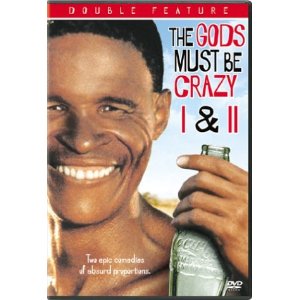
Film review: The Gods must be crazy (1988), by Jamie Uys, ****

Synopsis

Both instalments of the 'epic comedy of absurd proportions' about the dubious benefits of Western civilisation. In 'The Gods Must Be Crazy', a Coke bottle drops out of the sky to the amazement of the Kalahari Bushmen who find it: they believe it to be a gift from the Gods. The bottle initially seems to the bushpeople to be a miraculous blessing, and they use it for all sorts of different purposes - but before long it becomes a source of conflict as they start to squabble over it. Eventually, one of the men, Xixo (played by real-life Bushman N!xau) sets out to return the bottle to the gods from whom he thinks it must have come, and so begins his first ever foray into 'civilisation'.

In the sequel, 'The Gods Must Be Crazy 2', Xixo loses his children when they accidentally stow away on the back of an elephant poacher's truck while on a hunting expedition in the desert. Once again, Xixo must venture into civilisation to retrieve them. The only problem is, he is continually distracted by so-called 'civilised' people who seem be in greater need of rescuing than his children are.


30 December 2012

Film review: Water (2006), by Deepa Mehta, *****

Synopsis

Set against the epic backdrop of the River Ganges in 1938 during Mahatma Gandhi's rise to power, this is the inspiring tale of an eight year old Hindu girl named Chuyia. Chuyia's life is suddenly changed when she is widowed and sent to a home where Hindu widows must live in penitence. She refuses to accept her fate and her feisty presence begins to affect the lives of other residents, including a beautiful young widow, Kalyani (Lisa Ray of Bollywood/Hollywood) who has fallen in love with Ghandian idealist, Narayan (Bollywood star John Abraham).

Extremist groups waged a campaign of death threats, arson and riots to stop the production of this controversial film, but director Deepa Mehta would not be silenced. Set against Gandhi's rise to power, Water tells the profoundly moving story of Chuyia, an Indian girl married and widowed at eight years old, who is sent away to a home where Hindu widows must live in penitence. Chuyia's feisty presence deeply affects the other residents, forcing each to confront their faith and society's prejudices.


29 December 2012

Film review: Winds of Sand, Women of Rock (2010), by Nathalie Borgers, *****

Synopsis

Amina is preparing to leave with the date caravan. Every year, she and many other Toubou women make this 1500 km journey from Agadez to Bilma, across Niger's Sahara, despite the danger, the heat (50°C) and the sandstorms.

For these nomadic women, the journey is the key to their economic independence: they sell their goats and bring back dates, and with the income from the sale of the dates, a family can live for a year. But Amina, a rebellious 26-year old, has had enough of this long trip. En route, she finds a friend in Mariama and, far from the men, the two young girls share their dreams of a modern, independent life. When they reach their destination, they try to put their plans into action. But Domagali is weary of joining them, and longs to go back to the Sahara, where the grass is free.


28 December 2012

Film review: Friends with benefits (2011) by Will Gluck, ****

Description

Dylan (Justin Timberlake) is done with relationships. Jamie (Mila Kunis) decides to stop buying into the Hollywood clichés of true love. When the two become friends they decide to try something new and take advantage of their mutual attraction – but without any emotional attachment. Physical pleasure without the entanglements. Sounds easy enough for two logical adults, right? Not so much. They soon realize romantic comedy stereotypes might exist for a reason.


Review

This is not as good as "No Strings Attached" but "Friends with Benefits" is nonetheless fun and worth the affordable price of this DVD on Amazon. The film has its well designed twists and turns and it is never completely predictable. One just wonders how many real "friends with benefits" are there in the world, but certainly this choice of partnership is becoming more acceptable and common in the early XXI century. There are even websites devoted to it. It sounds perfect does it not? Free fun without the burden of either commitment or involvement. Not so fast...


27 December 2012

Film review: While you were sleeping (1995) by John Turteltaub, ****

Lucy gets a gift from her new family
Synopsis

Lucy (Bullock) dreams of a man, and when she happens to be engaged to him through the most unusual chain of coincidences she realizes he is actually not for her. Someone else is. Despite the social pressure that builds up through the film, she eventually does what is necessary!


Review

This is certainly among the best rom/com I have ever seen, and I am looking forward to letting a few months go by and then I will watch the DVD again. Bullock is great is her natural simplicity. But it is Pullman who is perhaps the real star with his understated but deep personality. Most supporting actors are great as well, which is a real plus.

I also find a message in this film, not sure whether it was intended by either its author or the director but here it is: be ready to change your life, because what you really wanted for a long time, and thought was impossible, might actually happen. When it does, it might not be what you expected, so again: be ready to change your target, fast.

It seems to be a recurring theme is Bullock's movies. I got a very similar message out of "The Proposal" (which I also review in this blog). I treasure it in my own life.


24 December 2012

Immondizia a Roma, 1753-2012

Targa murale del 1753, Roma
Si trova in Via dei Cappellari
ed ecco il 2012, in alto a sinistra la targa del 1753

Passeggiata a Roma, nei pressi di Campo dei Fiori. Mi colpisce una targa posta sul muro oltre due secoli fa, per far divieto di buttare immondizia per strada. Si promette di mantenere il segreto per i delatori. E si minacciano multe e punizioni corporali per gli sporcaccioni che venissero condannati. I padroni sono responsabili per i loro servitori ed i padri per i figli.

Ecco qui nella foto, oggi 24 dicembre 2012, quello che si vede proprio sotto la vecchia targa.

Forse sarebbe il caso di rimettere in pratica questo editto del Monsignore presidente delle strade. O forse chissà, non è mai stata abolita, bisognerebbe solo applicarla.

23 December 2012

Mithraeum of Santa Prisca in Rome

Today I have visited a small secret of ancient Rome. I strongly recommend it to anyone interested in exploring off the beaten track ancient Rome.


Una descrizione in italiano e istruzioni per la visita sono presenti su questo sito. Consiglio anche un sito completo su Roma antica sotterranea.


Description

In 1934 the Augustinian Fathers accidentally discovered a Mithreum, a place of cult consecrated to the God Mithra, under the Church of Santa Prisca. The Mithreum was built using the walls of a house dating back to the first century A.D. and of a building of the second century with two naves on which the church was built later.

There is a niche in the rear wall bearing an inscription in the vault that proves the Mithreum was already in use in the year 202 A.D.. The statue of the cult representing Mithra killing a bull and a Saturn lying down built with fragments of amphorae covered with stucco are placed in the niche. The Mithreum was destroyed violently around 400 A.D., probably by the Christians before the Church of Santa Prisca was built. (From Romacapitale)

The Mithraeum later became a Christian church


My visit

Very appropriately I visited on 23rd December, which is when the Romans celebrated the cult of the sun god venerated in Mithraism. We were a small group of six and were led into the chamber by our tour guide and a custodian.

Statue of Coates symbolizing the dawn of the sun
It is possible to take photographs in the Mithaeum but without a flash.

19 December 2012

Film review: An Autumn Tale (1998), by Eric Rohmer, ****

Synopsis

Eric Rohmer's light-hearted romantic comedy, set amongst the vineyards of the Rhône Valley, concludes his film cycle THE TALES OF THE FOUR SEASONS. Best friends Magali, a widow, and Isabelle, a happily married bookshop owner, have known each other since childhood. Although Magali enjoys her life as a wine grower, she admits that she would relish some male companion- ship; a confession that prompts Isabelle to secretly find her friend a man. After placing a lonely hearts ad, Isabelle chooses a suitor, but finds that things don't quite go according to plan...


Review

I won't repeat what others have said about the cast and the style of the director. It is a good movie overall, entertaining and amusing. I bought this movie as part of a series about wine. I was a little disappointed to find out it has only a bit to do with wine: French vineyards provide the background of the story and that's about it. Yes Megali does talk about her wine and her relationship with the land, but she could have played the same role in the film if she were growing olive trees.

Nonetheless I found it a great movie because it highlights the dynamics of match-making and dating in the pre-internet era. That was the time when there were no online dating sites and instead people wrote ads in papers. There was no email (though at one point in the film one can see a Minitel monitor) and if you were interested in someone you had to call. (Or write to a PO address.) I very much enjoyed living through what millions must have experienced while trying to find a partner in those times. The story is far from predictable however, and I won't tell it here...


15 December 2012

Film review: You will be my son (2010), by Gilles Legrand, ****

Synopsis

Paul Marseul (Niels Arestrup), owner of a prestigious vineyard in Saint Emilion has a son, Martin (Loran Deutsch), who works with him on the family estate named Clos de l'Abbé. Paul is a demanding and passionate winemaker but is a domineering father. He is not happy that his son may one day succeed him. He dreams of a son who is more talented, more charismatic . . . and more in line with his own aspirations. Things deteriorate as Paul's trusted manager (Patrick Chesnais) is dying of cancer. Philip (Nicolas Bridet), his brilliant son, who is also in the busines, returns from California to see his dying father. Paul sees Philip as his ideal son and turns away from his own flesh and blood.


04 December 2012

Film review: Crouching Tiger, Hidden Dragon (2000) by Ang Lee, ****

Synopsis

From Sony Pictures' web site: Named "Best Picture of the Year" by over 100 critics nationwide! Two master warriors (Chow Yun Fat and Michelle Yeoh) are faced with their greatest challenge when the treasured Green Destiny sword is stolen. A young aristocrat (Zhang Ziyi) prepares for an arranged marriage, but soon reveals her superior fighting talents and her deeply romantic past. As each warrior battles for justice, they come face to face with their worst enemy - and the inescapable, enduring power of love. Set against 19th-century China's breathtaking landscape, Crouching Tiger, Hidden Dragon is the action-packed, box office smash from acclaimed director Ang Lee (Sense and Sensibility, The Ice Storm) featuring stunning martial arts choreography by Yuen Wo Ping (The Matrix).


Review

A mesmerizing film. I am not a fan of wuxia films, and I believe this film could have done with much less rooftop flying and bullet deflecting. It is an excellent story in itself and it also shows a lot about a dramatic historical period in China (late XIX century). In fact, in my view one missed opportunity of this film is that it could have told us a lot more about the historical context. Also, I think the plot is overly complicated, after a while I gave up trying to follow all its nouances. Yet, it is hard to fault the director for his imprint. It does make a coherent whole and it is impressive. It is also a movie about the endless dilemmas of love and loyalty.

The sound track is beautiful as well and comes out well in the BD. Too bad there are no extras, at this price one would have expected some.

You can see a list of movies on China I have reviewed on this blog.


30 November 2012

Libro: Viaggio alle Maldive (2a edizione, 2015) di Marco Carnovale


Sinossi

Racconto dei molti viaggi alle Maldive dell'autore, che ha navigato in lungo e i in largo per gli atolli, incontrando la gente e cercando di capirne storia e cultura. Gironzolando sempre in barca, Marco ci porta a spasso per villaggi tranquilli, dove la tradizione cerca un difficile equilibrio con l'innovazione e la tecnologia. Ci guida per le strade della brulicante capitale Male', nei suoi angoli nascosti spesso trascurati dal turismo frettoloso. Durante decine di immersioni subacquee, egli è testimone della ricchezza faunistica e dei colori sfavillantii di questi mari. Ma le isole stanno affrontando gravi problemi e rapidi cambiamenti, e non sono sempre il paradiso che sembrano. Le Maldive sono ad una svolta, con cambiamenti politici, economici ed ambientali che pongono difficili sfide al governo ed alla nazione.

Ho anche fatto molte fotografie alle Maldive, sopra e sotto la superficie dell'acqua. Ne ho pubblicato una selezione nella mia pagina Flickr.

Puoi ascoltare un'intervista sul libro che è andata in onda il 17 Gennaio 2013 a Radio Alma, una radio italiofona di Bruxelles.

Puoi comprare il libro su Amazon.it cliccando qui. Disponibile in formato ebook kindle oppure copia cartacea:


Per chi vive fuori dall'Italia il libro è disponibile sui vari siti di Amazon:

Amazon.com, Amazon.fr, Amazon.co.uk, Amazon.de, Amazon.es


°°°°°°°°°°°°°

PREFAZIONE DEL LIBRO "Viaggio alle Maldive" di Marco Carnovale

ALCUNI ANNI FA, in preparazione del mio primo viaggio alle Maldive, feci il giro delle mie solite librerie, e passai al setaccio anche i principali siti di vendita di libri sul web, per approfondire la conoscenza di questa destinazione. Trovai guide turistiche, in gran parte focalizzate sulla descrizione dei servizi offerti nei villaggi vacanza multistellati, e qualche carta geografica. Con non poca sorpresa dovetti però constatare che non esisteva alcun volume, in italiano, dedicato a storia, politica, economia, arte, ambiente, usi, costumi, società delle Maldive, e neanche un racconto di viaggio. Allargando la ricerca a librerie e siti web internazionali venne fuori che qualcosa di più era stato scritto in altre lingue, frutto del lavoro di politologi indiani, di un esploratore arabo del milletrecento, di uno francese del seicento, di un viaggiatore inglese degli anni trenta e di un archeologo norvegese degli anni ottanta del secolo scorso, e poco altro. Anche se si tratta di una piccola nazione, e non mi aspettavo certo scaffali pieni, la scena letteraria era veramente desolante.